01
Planning for the grade
Many Crestview driveways rise or fall from the street. We set the slope so cars do not scrape at the apron and so water coming down the drive is steered to the edges instead of racing across the garage floor.
A driveway built for the climb from the street and the rain that comes with it. We compact a base in red clay, pour it thick enough for trucks and trailers, reinforce it with fiber and welded wire mesh, and shape it so runoff stays on top of the slab, not under it.
Tear-out, forms, base, reinforcement, pour, screed, broom, joints, cure. The whole job, in 3D.
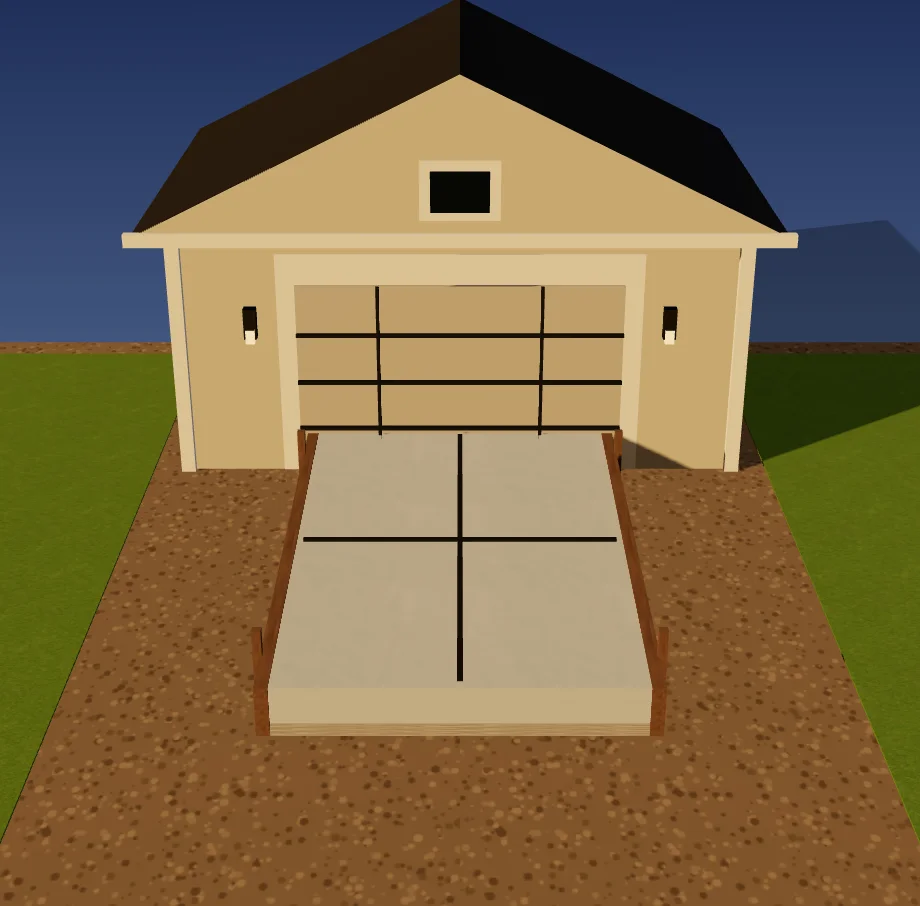
Drag the handle to reveal the finished pour.
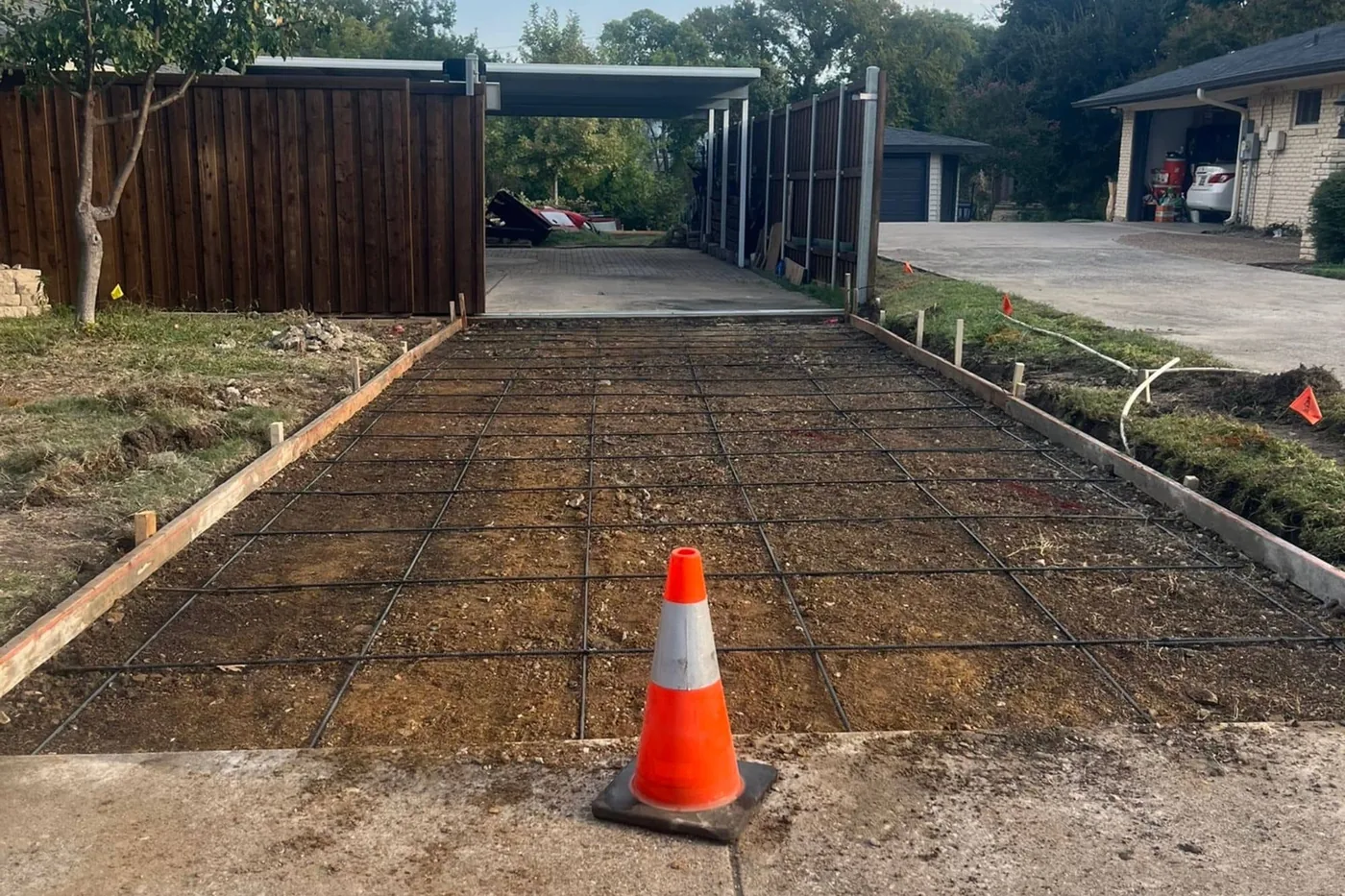
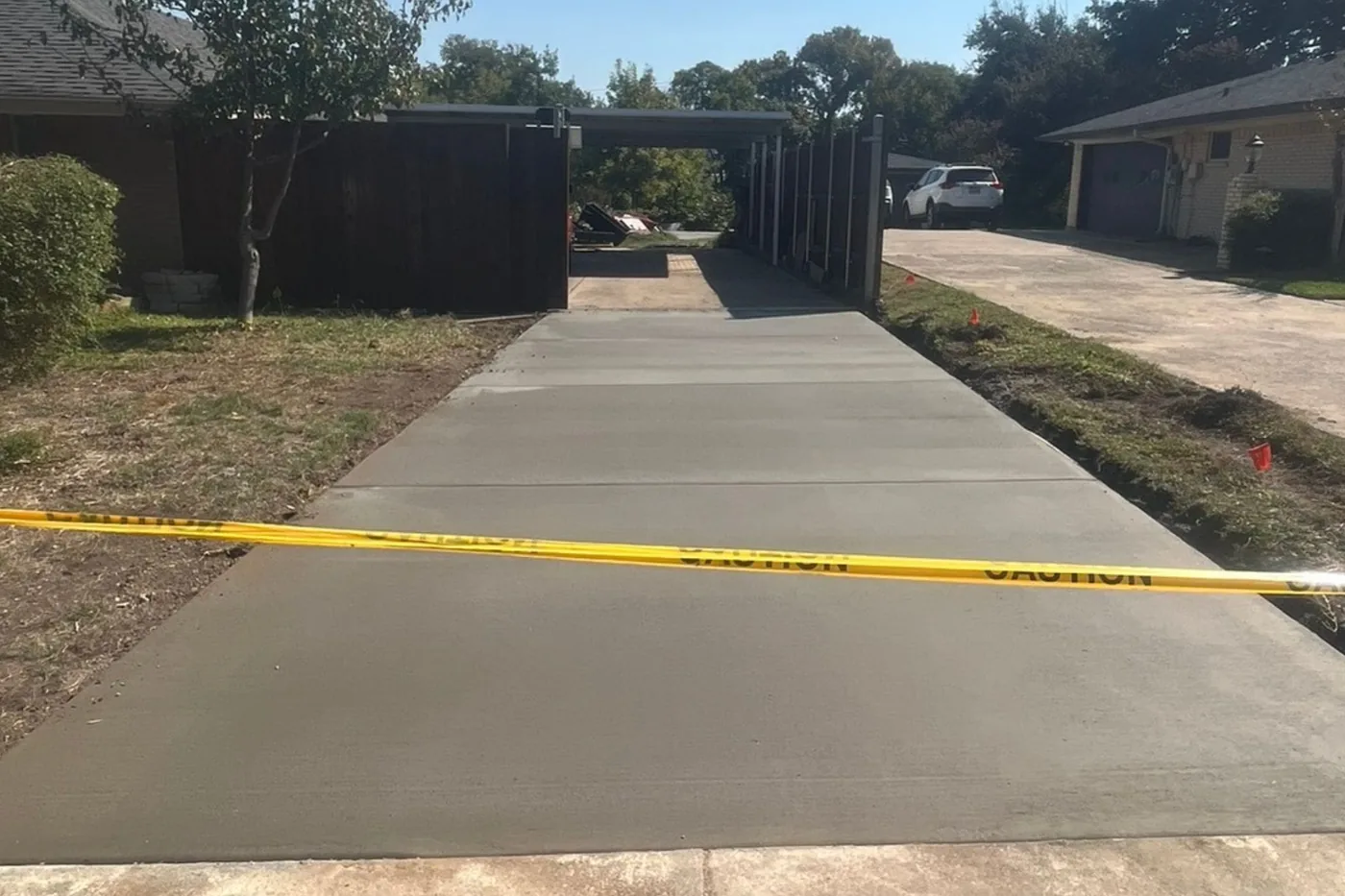
Credibility comes from how it's built, not from promises. Here's the order of operations on every concrete driveways job.
Many Crestview driveways rise or fall from the street. We set the slope so cars do not scrape at the apron and so water coming down the drive is steered to the edges instead of racing across the garage floor.
We remove soft topsoil and roots, then compact the subbase so the slab bears evenly. Red clay that is left loose under a driveway is how one tire track ends up lower than the other a few years later.
Driveways here carry pickups, work trucks, boat trailers and moving trucks, so we pour four to six inches depending on what you park and where the heaviest wheels will sit.
Structural fiber and welded wire mesh tie the slab together and spread wheel loads. Control and expansion joints go in where the slab meets the garage, the apron and the walk.
We give you a realistic date to park on it, based on the season and the weather that week, and protect the surface while it gains strength.
Most contractors vanish after the deposit. We pick up the phone, show up when we say, and stand behind the work after the truck leaves. The follow-through is the difference.
A foreman we know runs your job and a vetted crew does the work, managed by Lucky's, one company accountable from the first call to the final walkthrough.
COI and lien waivers on file before we break ground. The documentation that lets commercial clients pay and gives homeowners peace of mind.
Prepped subgrade, reinforced and mixed to spec for the job, and proper curing. We build credibility through the process, not promises. On concrete driveways, that starts with planning for the grade.
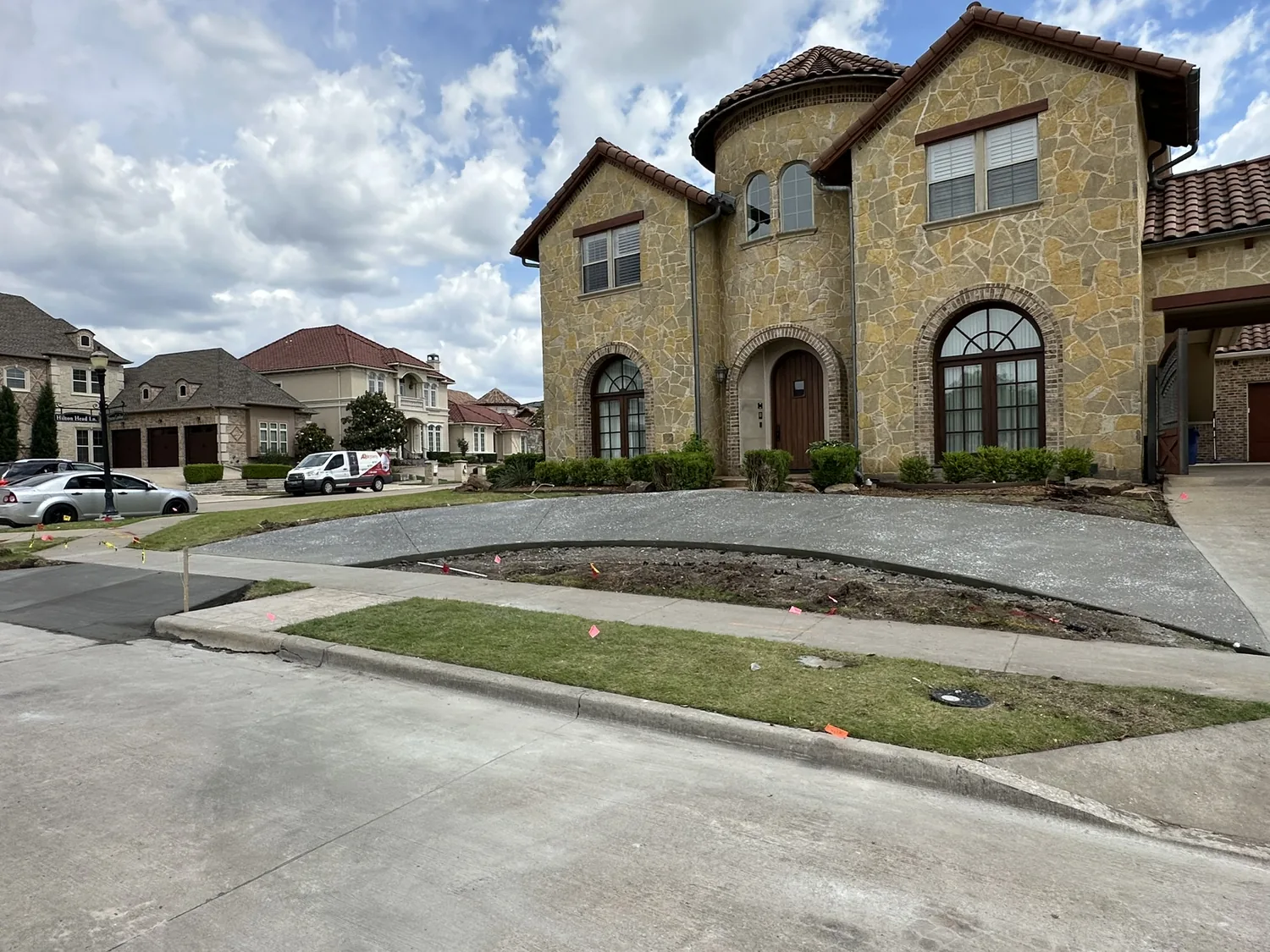
Square footage, thickness, tear-out of the old drive, and how much grading the slope needs are the big drivers. As a starting band, standard residential driveways usually run about $8 to $14 per square foot, with decorative finishes or difficult demolition costing more. We measure and look at the grade in person before quoting.
Mostly by controlling what is under it and where water goes. A compacted base over red clay, fiber and welded wire mesh in the slab, joints at the right spacing, and grading that keeps runoff from washing out the edges. Concrete can still crack; those steps make it far less likely and keep any crack tight and on a joint line.
Four inches works for typical cars. If you park a heavy truck, a camper or a boat trailer, we go to five or six inches in those areas. Tell us what you drive and we size it to that.
Foot traffic is usually fine after a day or two and car traffic about a week later, longer for heavy trucks or a cool stretch of weather. We give you dates for your pour before we leave.
Yes. Demolition, haul-off, base repair and the new pour are all one quote. If the old drive failed because of a soft base or water running underneath, we fix that cause during the rebuild.
It depends on where you are. Inside Crestview city limits the city handles it; in unincorporated Okaloosa County, tying an apron into a county road usually needs a right-of-way permit from the county. We check which applies to your address before we schedule.
You'll hear back from a real person, usually the same day. No call center, no runaround, no chasing us down.
Booking up fast this season. Or call (850) 613-9489