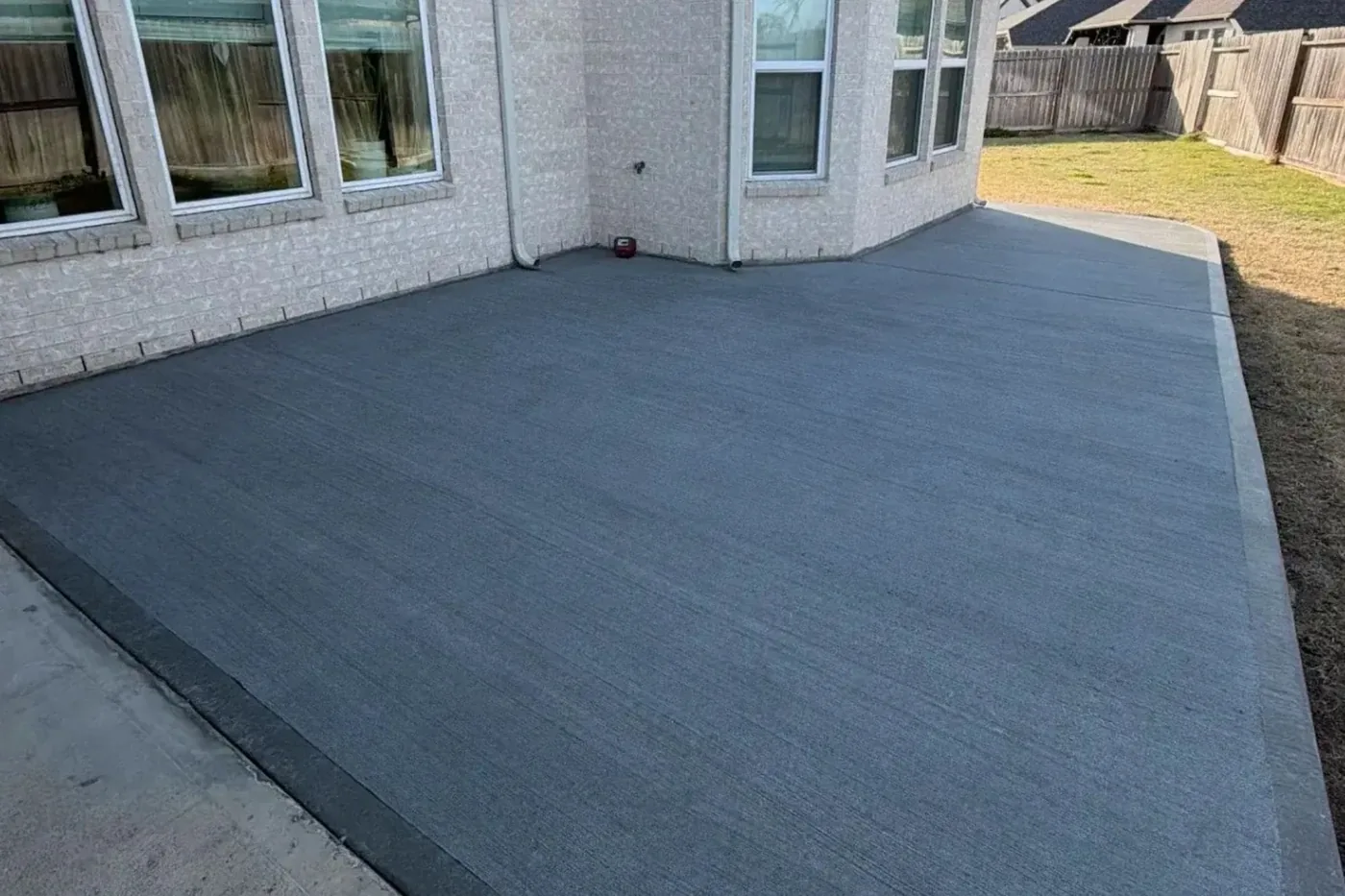
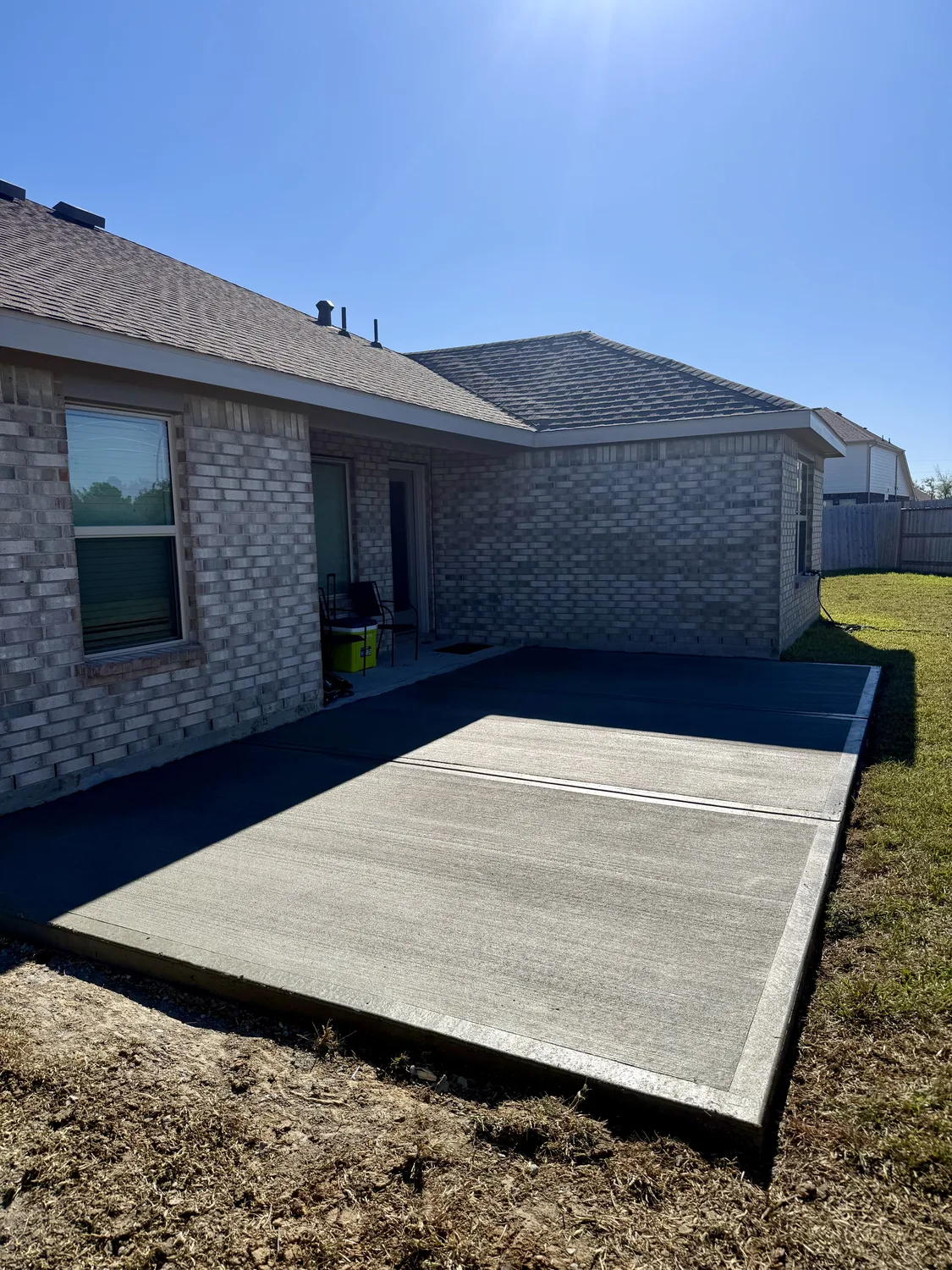
Reading the slope first
Few Crestview backyards are truly flat. Before any forms go up we shoot the grade, see where runoff already travels across the lot, and plan the patio so it works with that path instead of damming it against the foundation.
A back patio that stays put on Crestview's red clay hills. We cut and compact the base, reinforce the pour with structural fiber and welded wire mesh, and pitch the slab so the next hard Panhandle downpour runs around your house instead of toward it.
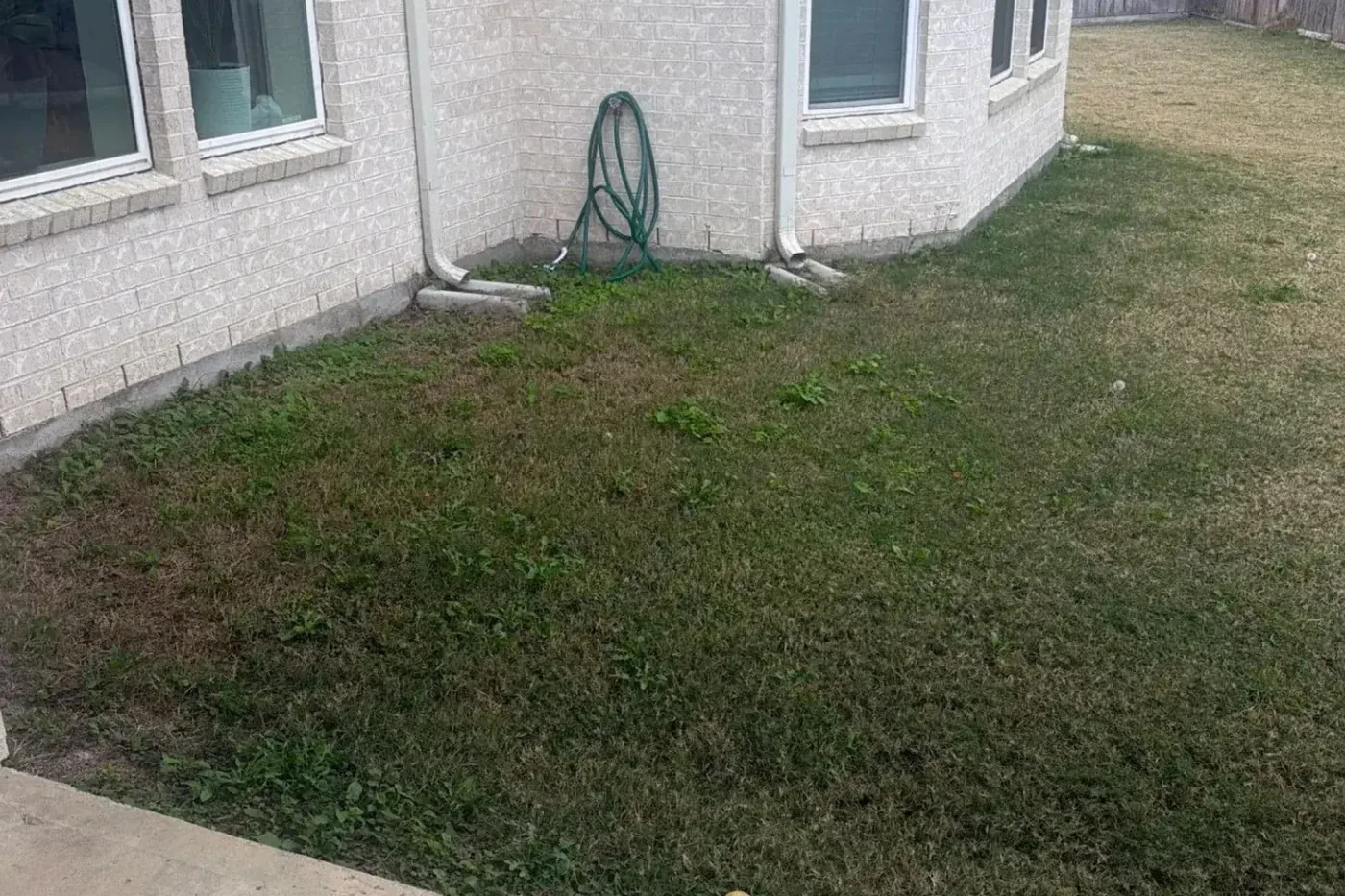
Drag the handle to reveal the finished pour.


Credibility comes from how it's built, not from promises. Here's the order of operations on every concrete patios job.
Few Crestview backyards are truly flat. Before any forms go up we shoot the grade, see where runoff already travels across the lot, and plan the patio so it works with that path instead of damming it against the foundation.
The iron-red sandy clay up here holds water longer than loose beach sand and gets slick and soft when soaked. We strip the topsoil, compact a stable base, and keep soft pockets from ending up under one corner of the slab.
Every patio gets structural fiber mixed into the batch and welded wire mesh across the slab. A heavy rebar grid is saved for structural or heavy-load work, which an ordinary patio is not.
We saw control joints where a slab this size wants to relieve stress, so if the clay underneath shifts after a long wet stretch, the movement shows up in a straight groove we chose.
Summer here means heat and sudden storms; winter can bring a frosty night or two. We time the pour and protect the fresh surface for whichever season you are building in.
Most contractors vanish after the deposit. We pick up the phone, show up when we say, and stand behind the work after the truck leaves. The follow-through is the difference.
A foreman we know runs your job and a vetted crew does the work, managed by Lucky's, one company accountable from the first call to the final walkthrough.
COI and lien waivers on file before we break ground. The documentation that lets commercial clients pay and gives homeowners peace of mind.
Prepped subgrade, reinforced and mixed to spec for the job, and proper curing. We build credibility through the process, not promises. On concrete patios, that starts with reading the slope first.

The site sets most of the price here. A level lot with good access is one thing; a sloped yard that needs cut and fill before the forms go up is another. As a starting point, broom-finish patios generally land around $8 to $14 per square foot and stamped or decorative work around $14 to $22, before any unusual grading. We walk the yard, look at the slope and the soil, and then give you a real number instead of a phone guess.
Four inches handles normal patio use: furniture, a grill, foot traffic. If a hot tub, outdoor kitchen or masonry fire pit is going on it, we thicken the slab or that section and add reinforcement to match.
Clay swells a little when it is soaked and tightens as it dries, and after a week of heavy rain that movement is real. We strip soft topsoil, compact the base, keep water from pooling at the slab edge, and saw joints so any movement follows a planned line. No one can promise concrete never cracks; we build so it cracks where it is supposed to, if it does.
Yes. Crestview winters are mild most days, but a cold front can drop overnight lows near or below freezing. We watch the forecast, adjust the mix and pour time, and cover the slab when a cold night lands during the first days of curing.
Broom finish costs less and grips well when the patio is wet, which matters in a place that rains as hard as it does here. Stamped gives you a stone or slate look but needs resealing every couple of years. We help you weigh looks, budget and upkeep for how you will actually use the space.
You'll hear back from a real person, usually the same day. No call center, no runaround, no chasing us down.
Booking up fast this season. Or call (850) 613-9489